How to Choose a Skincare OEM Manufacturer: A 2026 Buyer's Guide for Global Brands
Finding the right skincare OEM manufacturer is one of the most consequential decisions a beauty brand owner or procurement manager will make. The partner you choose determines your product quality, your speed to market, your unit economics, and ultimately your brand's reputation. Whether you are a startup launching your first serum or an established retailer expanding a private label line, this guide walks you through the 2026 landscape of skincare manufacturing so you can source with confidence.
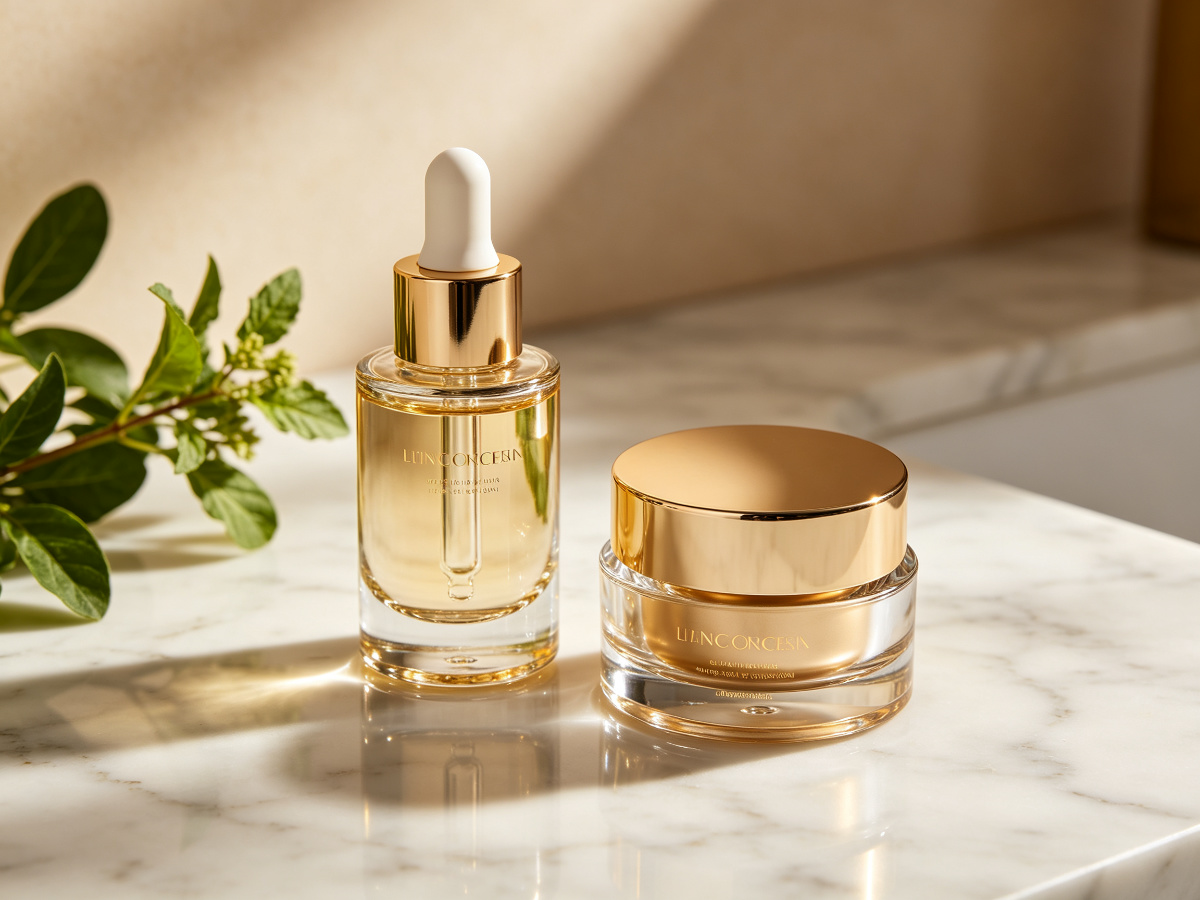
At wyoem, we work with brands across North America, Europe, the Middle East, and Asia, and we have seen firsthand how the right factory partnership compounds growth while the wrong one drains budgets. This article distills the practical knowledge you need: key selection factors, vetting steps, common mistakes, and the exact questions to ask every supplier before you sign a contract.
Why Your Choice of Skincare OEM Manufacturer Matters in 2026
The global skincare market continues to expand, but so does competition. Consumers are more ingredient-literate than ever, and they expect transparency around formulation, sourcing, and claims. A capable skincare OEM manufacturer does more than fill bottles; they help you navigate regulatory requirements, optimize costs, and translate a brand concept into a stable, compliant, shelf-ready product.
In 2026, three shifts are reshaping OEM sourcing:
- Regulatory tightening: Markets like the EU, ASEAN, and the GCC require detailed ingredient documentation, safety assessments, and responsible-person designations. Your manufacturer must be fluent in these requirements.
- Demand for smaller, faster runs: Indie brands want lower MOQs and quicker turnarounds without sacrificing quality.
- Traceability expectations: Buyers increasingly ask for batch-level documentation, COAs, and ethical sourcing evidence.
If you are new to the category, our Knowledge Center has foundational articles on everything from formulation basics to packaging decoration. For a broader view of how OEM partnerships scale, see From Monday Haircare to 20 Brands: How O, which shows how incubator-style OEM relationships can launch multiple brands from one manufacturing base.
Key Factors When Selecting a Skincare OEM Factory
1. Certifications and Compliance
Certifications are your first filter. At minimum, your skincare OEM factory should hold ISO 22716 (Good Manufacturing Practices for cosmetics) and operate under GMP-compliant processes. Depending on your target market, you may also need:
- FDA registration (for US market products)
- EU Cosmetic Regulation (EC) No 1223/2009 compliance and CPNP notification support
- Halal certification for Middle East and Southeast Asian markets
- Vegan, cruelty-free, or organic certifications (COSMOS, Ecocert) if your brand claims them
Ask for certificates with valid dates and verify them independently. Our guide on How to Verify Cosmetics OEM Factory Qual walks through this verification process step by step.
2. Formulation Capabilities
A strong skincare custom formulation manufacturer can develop products from scratch or adapt existing bases to your specifications. Look for in-house R&D chemists, stability testing facilities, and a track record across categories such as:
- Serums and essences (vitamin C, niacinamide, hyaluronic acid, peptides)
- Creams and moisturizers (ceramides, retinol, barrier repair)
- Cleansers, toners, and exfoliants (AHA/BHA, enzymatic)
- Sunscreens and hybrid skincare-makeup products
- Masks, eye creams, and targeted treatments
Ask whether the factory can handle both hot-process emulsions and cold-process formulations, and whether they offer preservative challenge testing and compatibility testing with your chosen packaging.
3. MOQ and Pricing Structure
MOQ is often the deciding factor for new brands. Typical MOQ ranges in 2026:
| Product Type | Typical MOQ (units) | Notes |
|---|---|---|
| Standard stock formula, existing packaging | 1,000 – 3,000 | Lowest cost, fastest lead time |
| Custom formulation, stock packaging | 3,000 – 5,000 | Requires sample approval |
| Custom formulation, custom packaging | 5,000 – 10,000 | Tooling and decoration add cost |
| Premium/airless or complex packaging | 10,000+ | Higher tooling investment |
Pricing depends on formula complexity, active ingredient costs, packaging materials, decoration methods, and order volume. Always request a detailed cost breakdown: formula cost, filling cost, packaging cost, decoration, testing, and freight.
4. Lead Times and Production Capacity
Standard lead times in 2026 are typically:
- Sampling and approval: 2–4 weeks
- Bulk production: 3–5 weeks after sample approval
- Packaging and decoration: 2–4 weeks (if custom)
- Total from PO to shipment: 8–14 weeks depending on complexity
Confirm capacity before committing. A factory running at 95% utilization may promise timelines it cannot meet. Ask about their peak season (often Q3 for holiday retail) and how they prioritize new clients.
5. Packaging and Decoration Services
Packaging is where many brands differentiate. A full-service cosmetics private label factory should offer or coordinate:
- Bottle, jar, tube, and airless pump sourcing
- Silk screening, hot stamping, labeling, and shrink wrapping
- Custom mold development for unique shapes
- Secondary packaging (boxes, inserts, cartons)
If packaging is sourced separately, ensure the factory can handle incoming component inspection and compatibility testing. Mismatched components are a leading cause of leaks, oxidation, and returns.
How to Choose the Right Skincare OEM Manufacturer: A Step-by-Step Process
- Define your product brief. Write down target market, price point, key claims, desired ingredients, packaging format, and estimated first-order volume.
- Shortlist 5–8 suppliers. Look for factories with relevant category experience and certifications matching your markets. Our guide on How to Choose a Cosmetics OEM Supplier f offers a detailed shortlisting framework.
- Request samples and quotes. Compare not just price but also formula quality, texture, scent, and stability data.
- Audit or video-tour the factory. If travel is not possible, request a live video walkthrough of the production floor, QC lab, and warehouse.
- Review documentation. Ask for COAs, MSDS, stability reports, and certification copies.
- Negotiate terms. Clarify payment schedule, Incoterms, lead time penalties, and reorder procedures.
- Run a pilot order. Start with a smaller batch to test quality, communication, and logistics before scaling.
For a deeper dive into partnership models and what leading manufacturers offer in 2026, read How to Partner with the Leading Cosmetic.
Common Mistakes Brands Make When Sourcing Skincare OEM
- Choosing on price alone. The cheapest quote often hides costs in packaging, testing, or freight. Total landed cost is what matters.
- Skipping sample validation. Always test samples for texture, absorption, scent, and stability before approving bulk production.
- Ignoring regulatory requirements. A formula legal in one market may be restricted in another. Confirm compliance before formulation.
- Underestimating MOQ impact. Ordering too much ties up cash; ordering too little may not cover packaging minimums.
- Poor communication cadence. Establish a single point of contact and weekly updates during production.
- No backup supplier. Even the best factory can face disruptions. Qualify a secondary source for your top SKUs.
Questions to Ask Every Skincare OEM Manufacturer
Before signing, ask these questions and document the answers:
- What certifications do you hold, and can you provide valid certificates?
- What is your MOQ for custom formulation versus stock formula?
- What is your standard lead time from PO to shipment?
- Do you conduct stability and compatibility testing in-house?
- Can you support regulatory filings in my target markets?
- What is your process for handling quality issues or recalls?
- Do you offer packaging sourcing and decoration, or should I source separately?
- What are your payment terms and accepted Incoterms?
- Can you provide references from brands in my category or region?
- How do you handle formulation ownership and confidentiality?
If you are ready to discuss your project, Contact Us and our team will help you evaluate fit, timeline, and budget.
Conclusion: Building a Long-Term Partnership with the Right Skincare OEM Manufacturer
Selecting a skincare OEM manufacturer is not a one-time transaction; it is the foundation of your product pipeline. The right partner will grow with you, from your first 1,000-unit pilot to multi-container production runs. Prioritize certifications, formulation capability, transparent pricing, and clear communication over the lowest quote. Vet thoroughly, start with a pilot order, and build a relationship based on documented performance.
Whether you are launching a niche serum line or expanding a full skincare range, the manufacturers that will serve you best in 2026 are those that combine technical expertise with operational reliability. Use this guide as your checklist, ask the hard questions, and choose a partner who treats your brand's success as their own.
For product catalog, quotation, or sampling, please contact us
Contact: SIGE
Email: 27005046@qq.com
WhatsApp / WeChat: +86 15622220825
Website: www.wyoem.com | Main site: www.8OEM.com